
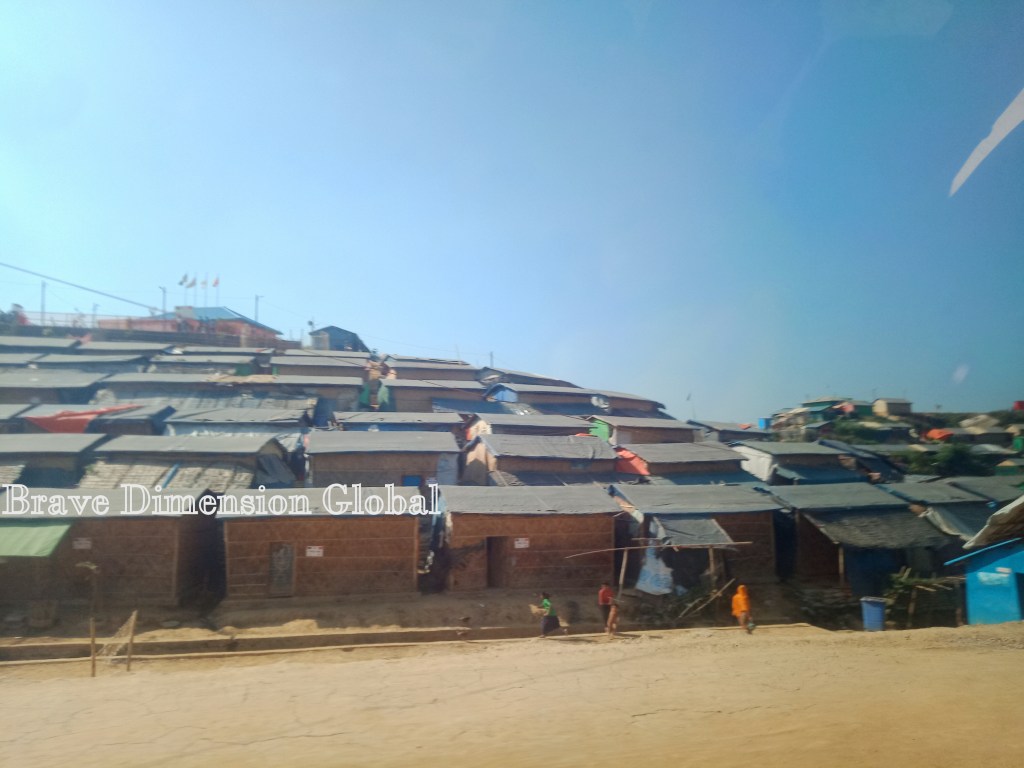
The Kutupalong-Balukhali Expansion Camp near the tourist town, Cox’s Bazar is now the world’s largest refugee camp and around a million Rohingya refugees have been living in different camps currently. This displaced crowd was too sudden that Bangladesh government had no other choice to resettle them immediately though more than 120 humanitarian organizations have been working so hard to make their lives better.
According to the UNAIDS report, there are currently 2,03,000 to 2,60,000 HIV/AIDS sufferers in Myanmar within 23% of injection receiver, 6.3% of female sex workers and 6.6% of homosexuals are infected with this virus. According to that, there are 2000/2500 AIDS patients among Rohingya who came to Bangladesh. These densely packed refugees are heightened the risk of HIV/AIDS, STDs and STIs, domestic and sexual violence, drug abuse and so on. Resources are even scarcer when it comes to healthcare, with only 6.3% of funding needs met of total crisis.
Sadly, in the host country, Bangladesh, only 3900 of 12 000 people living with HIV know about their status and only 1800 people are on antiretroviral therapy. This is very alarming news for the infected refugees regarding HIV/AIDS, STDs & STIs. As a result, so far 319 Rohingyas have been identified with HIV/AIDS, which were 273 till August 2018. Of these, 277 are under treatment.
According to concern people, till February, 448 people have been identified with HIV/AIDS within 319 are Rohingya and 129 are Bangladeshi. Among the victims, 277 Rohingyas and 72 Bangladeshis were brought under treatment. Among the HIV/AIDS victims total 63 people have died within 19 are Rohingya and 44 Bangladeshi.
December 13, 2019
Photo collection: Sohanur Rahman, Journalist/Climate ambassador/ social advocate





 Brave Dimension Global